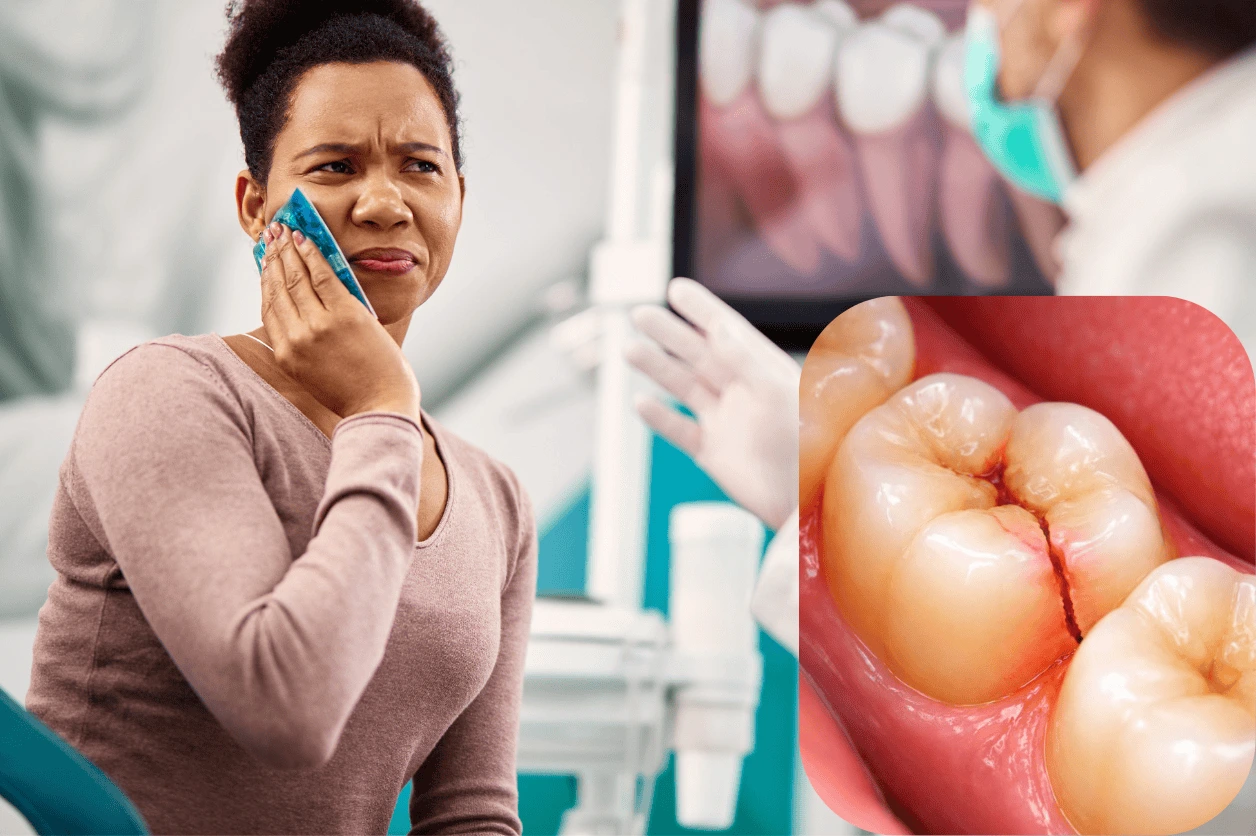


A cracked tooth can be uncomfortable, stressful, and sometimes difficult to detect. While some cracks cause immediate pain, others may go unnoticed for months. Understanding the signs, causes, and treatment options can help protect your oral health and prevent long-term damage.
Cracked teeth are more common than many people realize and are one of the leading causes of tooth loss in adults. Fortunately, early diagnosis and professional treatment can often save the tooth.
Several everyday habits and dental conditions can lead to cracked teeth, including:
Over time, these factors weaken the enamel, making teeth more prone to cracking.
Small, superficial cracks in the enamel.
They are usually painless and do not require treatment.
Often occurs around a dental filling.
Usually painless and does not affect the tooth’s nerve.
These cracks are more serious and require immediate dental evaluation.
If the crack reaches below the gum line, the tooth may not be salvageable.
A tooth that has separated into two or more segments.
In most cases, it cannot be fully saved.
Begins below the gum and moves upward.
Often causes minimal symptoms until infection develops.
Not all cracks are visible, but you may experience:
Because symptoms vary, a dental exam is often the only way to confirm a crack.

Depending on the severity of the crack, you may not know if one exists even if it is very small. Often times, your dentist will be the one to help diagnose a cracked tooth in conjunction with any symptoms you may be experiencing.
Your dentist may use several methods, including:
A cracked tooth is not always an emergency, but delaying care increases the risk of:
If pain, swelling, or sensitivity worsens, you should schedule an appointment as soon as possible.

These steps are temporary and not a replacement for professional care.
A tooth-colored resin repairs minor cracks and restores shape.
A custom-made crown protects and strengthens a damaged tooth.
If the crack reaches the pulp, removing the infected tissue can save the tooth.
Used when the damage is too severe to repair.
Unfortunately, no.
Once a tooth is cracked, it cannot heal naturally. Treatment is required to prevent further damage or infection.
Yes. Infections from cracked teeth can spread and may cause:
Prompt treatment helps prevent complications.
Contact your dentist if you experience:
Early treatment helps preserve your natural teeth and prevent costly procedures.
At Main Street Dental, we provide compassionate, modern dental care to diagnose and treat cracked teeth before they become serious problems. Treatment options include dental bonding, crowns, root canals, or extractions if necessary. Don’t wait—prompt care protects your smile and prevents complications.
Call to Action:
📞 Call us today at 760-295-9870 to schedule an appointment.
Location:
1830 Hacienda Dr. Suite 1, Vista, CA 92081
This article was informed by and inspired by the following resources:

.webp)