

Your wisdom teeth need to come out if they're infected, decayed or damaging the tooth in front. If they're healthy and you can keep them clean, they can stay, with checks at your routine visits. In most cases removal takes one visit and recovery about a week, and in 2026 California insurer rates ran $141 to $460 per tooth.
Wisdom teeth are your third molars, the last teeth to come through, between ages 17 and 25. Your dentist removes them when they're impacted, partly erupted and infected, or pushing on the molar in front, and most removals need only a local anesthetic. In March 2026, California in-network rates for a fully bony impacted wisdom tooth averaged $344. Main Street Dental provides family and emergency dentistry in Vista.
Book a check if a wisdom tooth is already causing trouble or looks set to: gum infections that keep coming back, decay, damage to the second molar, a cyst, or pain and swelling at the back of your jaw.
Impaction is common. A December 2024 meta-analysis in the Journal of Clinical Medicine pooled 98 studies and 183,828 people and found that 36.9% had at least one impacted wisdom tooth, with lower wisdom teeth impacted more often than upper ones.
Signs worth booking for:
That recurring gum infection has a name: pericoronitis. Cleveland Clinic lists being in your 20s as a risk factor. Wisdom tooth pain also travels, and our guide to wisdom tooth headaches and jaw pain covers pain that shows up in your head and ear.
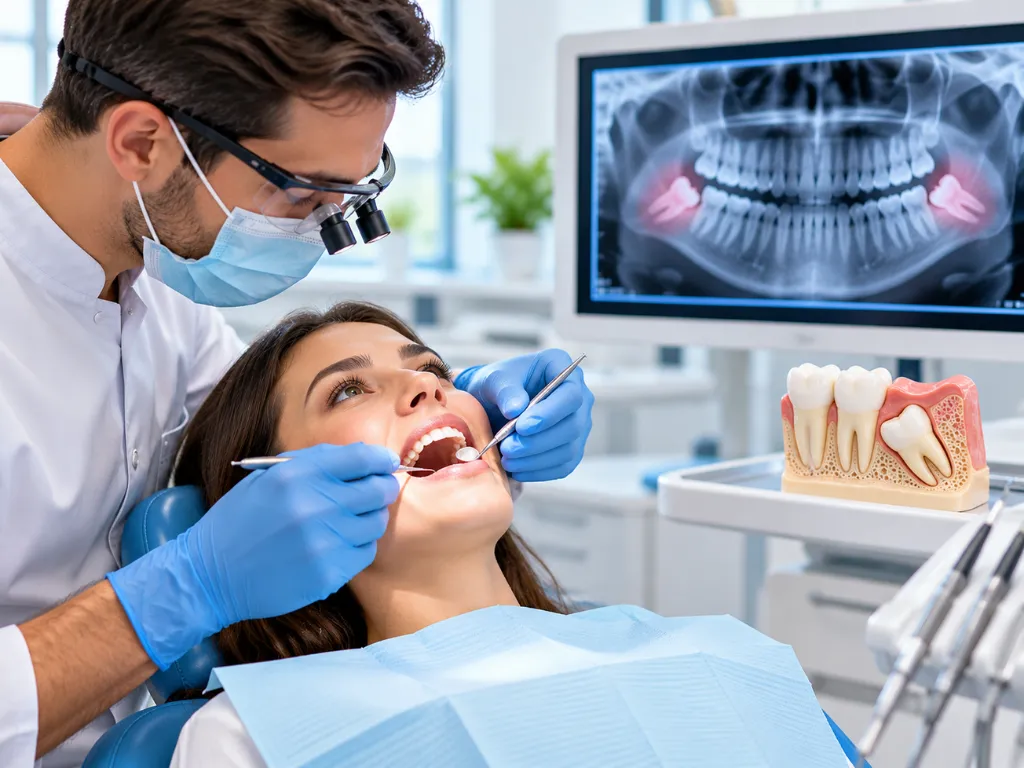
Your dentist diagnoses the problem from imaging. A panoramic X-ray shows all four wisdom teeth, their angle, their roots and the nerve canal in one picture. If the roots sit close to the nerve or the sinus, your dentist adds a 3D cone beam scan.
If you have fever, facial swelling, pus or difficulty swallowing around a wisdom tooth, get seen the same day. Cleveland Clinic warns that untreated pericoronitis can turn into an abscess and, in severe cases, become life-threatening. If swelling affects your breathing, go to an emergency room. For anything short of that, we keep same-day emergency appointments. In most cases we start by cleaning under the gum flap and controlling the infection, then remove the tooth once it settles.
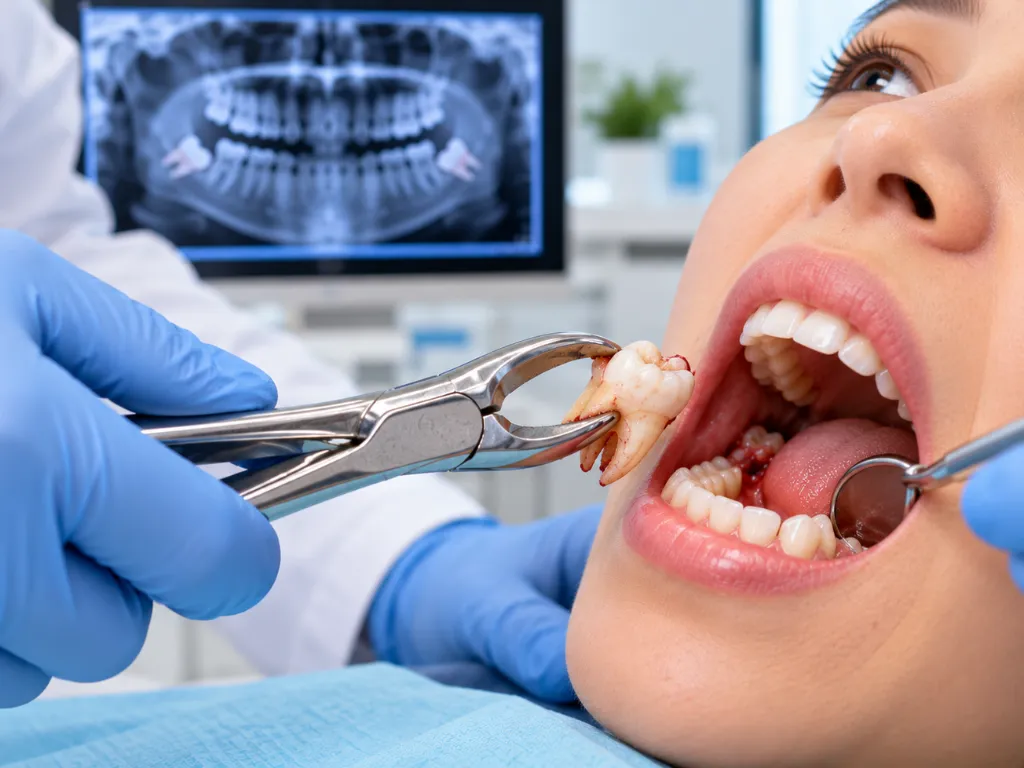
Keep a wisdom tooth that has fully come through, that you can keep clean and that looks healthy on X-ray. Remove one that's already causing disease or that you can't keep clean.
For a healthy impacted tooth, the research leaves the question open. The 2020 Cochrane review on removing symptom-free impacted wisdom teeth found only two studies with 493 participants. Its authors, led by Hossein Ghaeminia, concluded: "Given the current lack of available evidence, patient values should be considered and clinical expertise used" to guide the decision. They added that retained teeth need checks at regular intervals.
Oral surgeons want you to decide sooner. The American Association of Oral and Maxillofacial Surgeons' 2016 white paper says the choice to remove or watch should be made "before the middle of the patient's third decade," because removal gets harder and complications rise with age.
What we usually recommend:
We sit between the two camps. We leave healthy, cleanable wisdom teeth alone, and we act on any that have started causing problems. Read more on when keeping wisdom teeth makes sense.
In most cases you'll need one appointment. Your dentist numbs the area, removes the tooth whole or in two or three pieces, and sends you home biting on gauze. The NHS says the removal itself often takes a few minutes and should take no more than 40 minutes.
California regulates dental sedation. Since January 1, 2022, a dentist needs a Dental Board of California moderate sedation permit to give IV moderate sedation, and a separate general anesthesia permit to put patients fully to sleep.
Sedation makes sense for deep bony impactions, several teeth at once or real dental anxiety. For a single erupted wisdom tooth, local anesthetic alone does the job.
According to the NHS, most people get back to normal activities within 1 to 3 days, and swelling starts to ease after day 2. After a surgical removal, some soreness and jaw stiffness can last up to 2 weeks.
Day 1
Days 2 to 3
Days 3 to 5
Days 6 to 7
The day-by-day steps come from our extraction aftercare instructions, and you'll get a paper copy too.
Watch for dry socket. It happens when the blood clot breaks down and leaves bone exposed. StatPearls puts the rate at 0.5% to 5% of all extractions and cites reviews reporting around 30% after lower wisdom tooth removal. It tends to start 1 to 5 days after surgery, and painkillers don't relieve it. The AAOMS lists pain spreading toward the eye, ear, neck or temple and a foul taste as signs.
For pain relief, start with over-the-counter medicine. The ADA's 2024 acute dental pain guideline recommends NSAIDs such as ibuprofen, with or without acetaminophen, as first-line treatment after an extraction, and advises against "just in case" opioid prescriptions. Take the dose your dentist gives you before the numbness wears off.
In March 2026, California insurer-negotiated rates ran from $141 for a simple wisdom tooth extraction to $460 for a complicated fully bony impaction, per tooth, before sedation and X-rays.
California in-network rates, March 2026:
These figures come from PayorMap's California extraction rate data, compiled from insurers' federal Transparency in Coverage files. They show what in-network dentists agreed to accept. An office charges uninsured patients its own, higher fee, so read these as a minimum.
At those rates, four fully bony impacted wisdom teeth, 45 minutes of IV sedation and a panoramic X-ray add up to $1,830. If your PPO paid 80% of every line under a $1,500 annual maximum, it would pay $1,464 and you'd pay $366. ADA News reported in December 2025 that 32.8% of in-network annual maximums sit between $1,000 and $1,500.
Ask for a quote broken down by CDT code. The impaction code sets most of the price, and your dentist picks it from the X-ray, so two fair quotes for "four wisdom teeth" can differ by hundreds of dollars.
Main Street Dental accepts most PPO plans and CareCredit, and offers Cherry monthly payments. Ask your plan whether it covers the IV sedation codes as well as the extraction codes.
We refer you to an oral and maxillofacial surgeon if the X-ray shows the roots close to the jaw nerve, the tooth sits deep in bone, you want to be fully asleep, or your medical history calls for a specialist setting.
The nerve is the main reason. The inferior alveolar nerve runs under your lower wisdom teeth and gives feeling to your lower lip and chin. A 2014 review in the Journal of Oral and Maxillofacial Research put nerve injury after lower wisdom tooth removal at 0.35% to 8.4%, with higher risk in patients over 24, with horizontal impactions and with less experienced surgeons. Most injuries recover, and permanent injury is rare.
According to the AAOMS, oral and maxillofacial surgeons complete four to six years of hospital-based surgical residency and train in all aspects of anesthesia. In California, putting a patient fully to sleep also requires the general anesthesia permit that most general dentists don't hold.
We'd refer you for a horizontal lower wisdom tooth whose roots overlap the nerve canal, or an upper one pressed against the sinus. We send over your X-rays, and you come back to us for routine care.
Your X-ray and your gums decide this more than your age does. A tooth that keeps inflaming the gum, decays or harms the molar in front should come out, ideally before your mid-20s while surgery is simpler. A healthy one you can keep clean can stay with regular checks. Expect one visit, a week of careful eating and rinsing, and a price set mostly by the impaction code. If the tooth sits deep near the nerve, we'll send you to a surgeon.
Book a wisdom teeth exam at Main Street Dental, 1830 Hacienda Dr, Suite 1, Vista, CA 92081, through our contact page, or call (760) 295-9870.
According to the NHS (2024), the removal itself often takes a few minutes and no more than 40 minutes. Plan on 1 to 2 hours at the office for check-in, numbing and gauze time, and longer with IV sedation. Most people return to normal activities within 1 to 3 days.
We can see you the same day through Main Street Dental's emergency appointments, but the tooth may not come out that day. As Cleveland Clinic describes, dentists often treat an infected wisdom tooth first by cleaning under the gum and controlling the infection, then book the removal once the swelling settles. If you have trouble breathing, go to an emergency room.
Eat soft food for the first 2 days, then go back to normal meals once chewing feels comfortable, which for most people is within the first week. Our post-op instructions ask you to chew on the other side for 24 hours. The NHS advises avoiding nuts, seeds and crunchy food that can lodge in the socket.
At Main Street Dental, 1830 Hacienda Dr, Suite 1, Vista, CA 92081, we assess and remove wisdom teeth for patients from Vista, San Marcos, Oceanside and Carlsbad, with oral and IV sedation available. Dr. Daniel Javaheri, DDS, an NYU College of Dentistry graduate, leads the practice. Call (760) 295-9870 to book.